As some of you might know, I’ve spent much of my time the last 6 months working on Windows Azure – which is Microsoft’s Cloud Computing Platform (I also continue to run the teams that build ASP.NET, core pieces of .NET and VS, and a bunch of other products too).
I’m pretty excited about where we are going with Windows Azure – it is going to enable a number of great new scenarios for developers. Over the next few months I’m going to be blogging a lot more about it – and I’ll cover both what it provides as well as how you can easily take advantage of it as developers.
Learn Windows Azure Talk
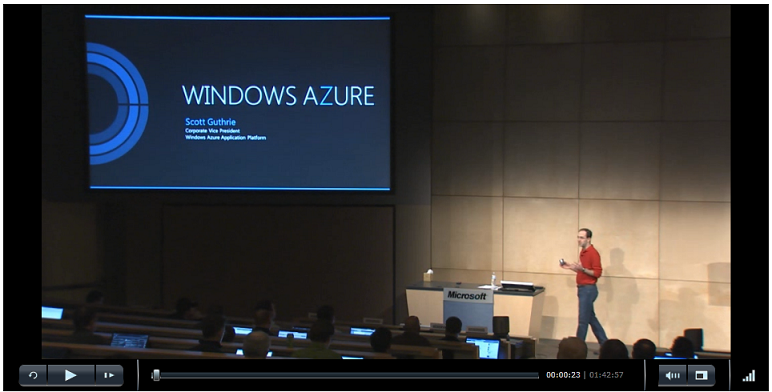
Before the holidays we held a special “Learn Windows Azure” event. A recording of the keynote I gave is now available to watch online. It provides a 90 minute end-to-end look at Windows Azure, covers what it is and how it works, and walks-through a bunch of demos + code on how you can program against it. You can now watch my talk online and download the slides and samples.
Over the new few weeks and months I’ll be blogging more, and will go deeper into Windows Azure and discus both what you can do with it, as well as how to easily get started.
Hope this helps,
Scott
P.S.In addition to blogging, I use Twitter to-do quick posts and share links. My Twitter handle is: @scottgu
Catching a winter cold? There is only one cure — a little vitamin C. The same holds true in the floral world; the bright spot on our winter horizon is the mountains of fresh, seasonal citrus fruits being harvested in Florida and California. If you’re lucky, you can find kumquats, oranges and lemons on the branch in gorgeous, mottled colors to use in arrangements or tablescapes, like this bouquet of winter flowers made in West Palm Beach. Florida happens year round, so here’s how to add some to your dreary winter days. — Amy Merrick
The humble orange — perfect for snacking or sipping but also a linchpin for many a florist in the cold months when attractive branches are scarce. The variety of winter citrus colors and sizes is astonishing. Lemons arrive in bright green or pale yellow, oranges in mottled greens and kumquats in deep tangerine. The foliage left on the branch makes a nice filler but can be removed so the fruit pops on its own.
Windows 8 looming for October 2012 launch: Windows 8 will be shipping around October this year if a hint dropped to Pocket-lint from Windows Business Group director of PR Janelle Poole eventuates. The radically redesigned OS, which Steve Ballmer has referred to as Microsoftís biggest gamble in recent times, had been rumored to ship early. Heavily criticized for failing to deliver a tablet OS to take on Appleís iPad, Microsoft is betting that by developing its full Windows platform around a touch-based paradigm that it will attract users who want a ëfullí desktop experience on a tablet....
Apple sent invitations on Wednesday to an event in New York City next Thursday, in which the company is planning to make “an education announcement.” ”Education,” of course, can mean a lot of things. Many are connecting the event with comments Steve Jobs made to his biographer about a project he was working on toward the end of his life, and expecting that the company is going to announce some sort of digital textbook initiative through its iBookstore platform.
There’s a lot of opportunity in digital textbooks, a space that’s rapidly heating up. Here is a collection of figures rounded up by the New York Timeslast fall that paint a good picture (emphasis ours):
According to the Student Monitor, a private student market research company based in New Jersey, about 5 percent of all textbooks acquired in the autumn in the United States were digital textbooks. That is more than double the 2.1 percent of the spring semester.
Simba Information, a research company specializing in publishing, estimates that electronic textbooks will generate $267.3 million this year in sales in the United States. That is a rise of 44.3 percent over last year. The American Association of Publishers estimates that the college textbooks industry generated a total of $4.58 billion in sales last year.
So it’s not necessarily a huge mystery why Jobs and Apple would want to be a part of a digital textbook and learning revolution, especially since it has a great tool for reading textbooks in the iPad. There are already 40 million of these sold, with another burst of sales expected this year when the next-generation iPad is revealed. But there are also plenty of companies that already do this. It’s not as if Apple would be filling an entirely gaping void here if it were to launch a textbook store or publishing platform. Here are some of the companies who are already making textbooks available on iOS devices:
Inkling. Inkling is a two-year-old San Francisco startup that debuted the latest version of its iPad textbook app in August (see our video here), which combines not just reading school texts, but cool social and interactive ways to study with others via the app and in-app links to external, authoritative sources. Inkling, notably, has taken investment from leading book publisher McGraw-Hill and education services provider Pearson. Inkling has 110 titles so far, mostly geared at college students, with some texts for high school and non-school titles as well.
Kno. Kno started out as its own e-reader for textbooks, but the company quickly moved to a software-only approach. Now the company has 150,000 textbooks from 45 publishers available. Their textbooks are viewable on Apple devices via the Textbooks by Kno on the iPad. Kno also has extra services beyond just reading, like its feature that generates flashcards for studying saving you the hassle of writing out the cards yourself. Last fall, the company was the top-downloaded educational app in Apple’s App Store.
CourseSmart. The company was founded by a group of higher education textbook publishers to offer digital titles. It currently has 20,000 college textbook titles and has had an iOS app for reading them for over a year.
Vitalsource. Ingram Content Group — the umbrella company for several textbook publishers — also has its own app, with 60,000 80,000 digital textbook titles available for download to any iOS device.
The iBookstore hasn’t been the smashing success that its other digital stores have been, like the App Store or iTunes, but textbooks would be a way to drive sales and interest in the platform. That said, what happens to these companies that are using Apple’s platform already for digital texts?
Kno CEO Osman Rashid says the company is secure in its position as one of the top providers of digital textbooks on Apple’s platform. “The robustness of the catalogue is what wins,” he said. Kno is working to differentiate itself by also providing ways for students to personalize their learning, as with the flashcard feature. Matt MacInnis, CEO of Inkling, didn’t seem threatened by what Apple might announce either.
“Apple has always done cool stuff in education, and this will be a continuation of that tradition,” MacInnis said in an interview. He says that based on Jobs being very public about his concern for K-12 textbooks, he added, “I’m sure they’ll do some interesting content-related things for the iPad and for K-12.” But “textbooks,” he says, is the wrong word to describe where this entire industry (and possibly Apple) is going. It’s too old-fashioned for what digital learning tools are going to become. “That’s going to have to go away. The future of publishing is learning software and analytics and feedback and rich technology.”
The PC market is in a serious decline both in the US and globally. According to Gartner, most manufacturers are struggling, except Apple which is on the rise.
Gartner's latest figures show that worldwide PC shipment estimates for Q4 2011 fell 1.4 percent. The biggest losers in the last three months of 2011 were HP and Acer, which declined 16.2 percent and 18.4 percent respectively. These numbers were even worse for the US market where shipment estimates declined 5.9 percent, the worst performance in the last decade.
The only bright spots, in an otherwise abysmal report, were recorded by Lenovo, Asus and Apple. While Acer and HP struggled in Q4, Lenovo and Asus were booming globally. Lenovo increased its shipments by 23 percent, and Asus grew an equally impressive 20.5 percent. Apple, however, was the star of the US market. The company's US shipments increased a significant 20.7 percent, while competitors like HP and Acer slipped 26.1 percent and 11.4 percent, respectively.
Analysts blame hard drive shortages for this quarterly decline. The supply of hard drives declined after devastating floods ravaged Thailand earlier in 2011. Though other manufacturers were struggling with supply constraints, Apple cruised along without missing a beat. Sales of the MacBook Air, which ships with flash storage and not a hard disk drive, probably gave Apple this extra bump.
Lenovo: Android tablets still need to improve to rival iPad: Lenovo's CEO Yang Yuanqing in an interview late Wednesday made the unusual comment that Apple had effectively locked up the tablet market in the near term. While Android had 32 percent of tablets, according to IDC, the executive told Bloomberg the iPad was the "leader" and that he didn't see Google changing this yet. Implying that even Lenovo's own IdeaTab S2 wasn't enough, he saw Android needing to find a breakthrough, although he wasn't clear what that was....
One accessory category that always seems to stir up reader interest is wireless webcams. We've seen our share of them over the last year: the Stem Innovations iZon (US$129.95), the iBaby Monitor ($199.95), and the WiFi Baby 3G ($279) among others. Lorex, a manufacturer of a number of security cameras, has joined the fray with the $299.99 LW2031 Live Connect Home Video Monitoring System.
Design
What makes this system so different from any other webcam I've reviewed recently is its integration with Skype. You actually set up a Skype account for the webcam, and then make a call to that account to view your webcam feed. Most other webcams either have a way to be viewed directly through an app or have a website that you can visit to see your feed. Using Skype as an intermediary is quite smart -- many people already use the app on iPhone, iPad, Mac, and PC, and are familiar with the steps required to make a video phone call.
The camera itself is similar to many of the webcams that we've reviewed here on TUAW. It requires an external power connection (in this case, through a mini-USB port), has infrared LEDs for night viewing, and uses Wi-Fi for connectivity to the world. The camera features a fixed focus and cannot be swiveled remotely, but you can add multiple cameras to a specific installation.
That multi-camera capability means that the Lorex system comes with something that is unique among many home video monitoring systems -- a wireless gateway. The gateway requires its own power plug and must be connected directly to a home router. In my testing, I connected it directly to an Apple AirPort Extreme.
Setup of the Lorex system was fairly straightforward. Once the camera and gateway were plugged in and powered up, I launched Safari and clicked the "Open all bookmarks" button. Clicking on the Bonjour (zero-configuration discovery) icon, I immediately saw the Lorex gateway appear on a list of devices. Double-clicking the gateway icon brings up a configuration website allowing you to set the time zone and Skype name of the device.
Once the configuration is complete, you can use Skype to call the gateway. The IM area at the bottom of the Skype screen shows the connection being made, and then the image appears. At first, the image is usually quite pixelated, but it clears up after a few seconds. Lorex notes that this is caused by the system configuring the bandwidth settings.
If you have more than one camera working through your Lorex gateway, the Skype instant message capability is used to switch between cameras. For instance, to switch to camera 2, you'd send the word cam2 to the gateway. Up to four cameras can be connected to one gateway.
One very cool feature of the Lorex system is the wireless monitor, a small white box roughly the size of an iPhone with a small built-in LCD screen. This can be used to switch between cameras or to watch and listen to each of the cameras. The box comes with a micro-SD card slot for capturing images that you see on the screen, perfect if you want to capture your baby's first steps while you're in another room or snap a photo of the dog soiling your favorite Turkish rug.
Functionality
I wasn't particularly overwhelmed with the image provided by the Lorex camera. Even after the pixelation cleared, the images were still quite fuzzy and the colors were way off. By comparison, the much less expensive iZON camera appears much sharper and provides accurate color. If it's any consolation, the Foscam webcam that I also have does a lousy job of matching colors -- I think it's an artifact of these cameras with infrared lighting for good night viewing.
Speaking of that infrared lighting, the Lorex cameras come with a detector that automatically turns on the lights when it gets dark. When illuminated, the infrared lights glow a dull red and they do an excellent job of lighting up the scene up to 22 feet away. The built-in microphone is very sensitive and you need to be sure that the wireless monitor (see below) is far enough away that you don't experience feedback.
The response time of the Lorex camera through Skype was excellent, registering motion with almost no lag. The iZON has a tremendous lag of about 15 seconds, and the Foscam webcam shows about a 1 or 2 second lag.
The wireless monitor is a nice feature, but seems redundant in this day of smartphone and tablet ubiquity. Why have yet another device to carry around, charge, and possibly lose? I was able to connect flawlessly with the webcam using Skype for iPad, but was unable to connect with the iPhone Skype app over Wi-Fi. It worked great over 3G, which is fine since that's a common use scenario.
One feature I like about the cameras is that they contain their own battery and can therefore survive a short power outage or even be moved to a location away from a power outlet for brief periods.
Conclusion
While the Lorex Live Connect Home Video Monitoring System is quite a bit more expensive than other systems I've tested for TUAW, it's also the most expandable and the only system that includes a separate portable monitor. Setup is relatively easy and very well documented in the user manual that is packed in the box.
I was initially quite skeptical about Lorex's use of Skype as the preferred monitoring application, but after using the system I can see where it makes sense. Rather than come up with a proprietary app that would require constant updating, using Skype as the monitor gives Lorex one less component to worry about.
I did have one minor gripe, as one of the three generic power bricks that came with the unit failed during testing. Fortunately, I'm well equipped with those adapters and was able to recover from the loss quickly.
I'd recommend the Lorex Home Video Monitoring System for anyone who needs a multiple camera setup and is already familiar with setting up and using a Skype account for video calls. While the image quality of the cameras could be better, the system provides sufficient capabilities to monitor your home, your baby or your pets whether it's day or night.
As we approach the one-year anniversary of the iPad 2′s introduction, rumors are heating up around its successor. The iPad 3 is reportedly now in production in preparation for an early March launch, according to Japanese site Macotakara. The blog says Foxconn and Pegatron are handling iPad next-gen iPad assembly, as they have done for previous Apple devices.
Macotakara’s Chinese sources say that Foxconn will handle 85 percent of next-gen iPad orders, while Pegatron will take on the remaining 15 percent. While the blog hasn’t always been 100 percent accurate with its reports, it has been right on multiple occasions, including when it called the iPad 2′s March launch, and today’s report is very much in line with what we have been hearing elsewhere. Macotakara reports the initial batches will use Sharp LCD display panels, echoing a rumor that cropped up in late December. Sharp was reported at the time to have secured a contract to provide Apple with new IGZO-based panels that allow for high-res, 2048 x 1536 displays without adding additional bulk.
The new report also claims that, as recent rumors suggest, the next iPad will be visually similar to its predecessor and shouldn’t offer any noteworthy changes in terms of its case design. Tight-fitting cases might not fit, according to Macotakara, which is what iLounge’s Jeremy Horwitz also reported this week, but the Smart Cover and most other accessories should still be compatible with the iPad 3.
When Newbies waltz into my office, I always present to them the 21st century realities of the animation business, one reality being:
"Don't anticipate spending you career at one studio. If you're one place for five years, that's exceptional. You'll be working at lots of differents companies, both freelance and on staff. One or two decades from now, you'll be working at places that haven't been started yet ..."
That being the case, it's more important than ever that you sock loot away for your eventual geezerhood. Happily, TAG member Jennifer H. Jerrard has put up a fine post detailing some of the things people in the biz (both animation and visual effects) should be doing now. ...
... Those who don’t plan to work until they drop will need some means of paying for food and housing in their old age. Social Security alone might not be enough.
The Los Angeles visual effects industry does not offer a safety net for its retirees. Visual effects might earn big money at the box office, but VFX artists and VFX studios do not share in those profits. VFX artists do not earn ongoing income from a project after the project ends. When they retire, they’ll be on their own.
The older VFX artists I know already have some kind of plan for their future. Some left the VFX industry for better compensation at 839 studios, and some left VFX altogether. The rest save their money, pay down their debt, work towards home ownership, start their own businesses, create their own intellectual property, invest or practice some combination of the above. ...
For artists who spend their careers under the feathery wings of The Animation Guild, there is a bit more security. Things like:
* A monthly pension check from the MPIPHP to go with the Social Security check.
* A lump sum payment from the Individual Account Plan of the MPIPHP that can be rolled over into a tax-sheltered retirement account.
* A 401(k) Retirement Account from TAG.
My two cents: The best move you can make when you get into this business is to live below your means, pay yourself first, and assume that you will have to retire on your own stash even if that is not, three decades down the Great Highway of Life, the actual case.
When I was thirty-nine years old, I didn't have a pot in which to dump change from collecting empty Coke bottles. Then I got a series of jobs that actually paid something, and I made up my mind to put as much money away as possible, because I didn't want to be in a position where I was out of work and had no savings.
Again. Strange, huh?
Very slowly, I learned where to put extra money, and where not. I'm not a licensed financial advisor, but I believe that simplicity and low costs are the best strategies for most people, which has led me to put my money in:
I don't use an "Investment Advisor" since he or she usually skims 1% or 2% (plus commissions) off the top. I believe that every dollar you pay an Investment Person is a dollar you take out of your own pocket.
I further believe if your age is 25 to 45 then your stock/bond allocation should be 60%/40% ...
That if your age is 45 to 60 your stock/bond allocation should be 50%/50% ...
And if you are over the age of 60 your allocation should be 40% stock/60% bonds (maybe even 65%/35%.)
Whenever I've gotten tricky and invested in more exotic items, like sow belly futures or individual stocks, I have gotten burned. The small secret about smart investing is that it's simple ... if you allow it to be. The sad part is that many people start making it complicated by going a twisty route chasing hot tips and (ultimately) losing their shirts.
So keep it simple and straightforward. And know that time is on your side. It's close to impossible to outthink or outguess the markets. So don't waste time and energy trying.
Any "best of" list must surely be subjective. This one is no different. Choosing the best photographs of the year is an enormously difficult task, with many terrific photographs slipping through the cracks. But with major news events as a guide, and with single images I fell in love with throughout the year forcing their way into the edit, I look at my favorite pictures from the first four months of the year. Two main stories dominated headlines in the first part of the year: the Japan earthquake and tsunami, and the rising of the Arab Spring. The protests in the Middle East would spread to Greece, Spain, and eventually inspire the Occupy movement in Western nations. Other stories included a historic wave of tornados in the U.S., a Royal wedding in London, and the creation of the world's newest nation in South Sudan. Images from the rest of the year will follow in posts later this week. -- Lane Turner (36 photos total)
A wave caused by a tsunami flows into the city of Miyako from the Heigawa estuary in Iwate Prefecture after a magnitude 8.9 earthquake struck Japan March 11, 2011. (Mainichi Shimbun /Reuters)


 Windows 8 will be shipping around October this year if a hint dropped to Pocket-lint from Windows Business Group director of PR Janelle Poole eventuates. The radically redesigned OS, which Steve Ballmer has referred to as Microsoftís biggest gamble in recent times, had been rumored to ship early. Heavily criticized for failing to deliver a tablet OS to take on Appleís iPad, Microsoft is betting that by developing its full Windows platform around a touch-based paradigm that it will attract users who want a ëfullí desktop experience on a tablet....


 Lenovo's CEO Yang Yuanqing in an interview late Wednesday made the unusual comment that Apple had effectively locked up the tablet market in the near term. While Android had 32 percent of tablets, according to IDC, the executive told Bloomberg the iPad was the "leader" and that he didn't see Google changing this yet. Implying that even Lenovo's own IdeaTab S2 wasn't enough, he saw Android needing to find a breakthrough, although he wasn't clear what that was....


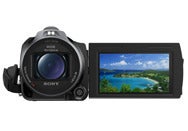 Sony today announced several new additions to its Handycam and Bloggie camcorder lines, including a new dual-1080p 3D camcorder that replaces last year's...
 As we approach the one-year anniversary of the iPad 2′s introduction, rumors are heating up around its successor. The iPad 3 is reportedly now in production in preparation for an early March launch, according to